Smart Food Lockers: How Food Banks and Pantries Use Them
Smart food lockers give food banks and pantries a private, flexible way to distribute fresh food. How they work, which order model fits, and what programs have seen.
Published Feb 5, 2026 • Updated Nov 8, 2026 • 7 min read
Share this
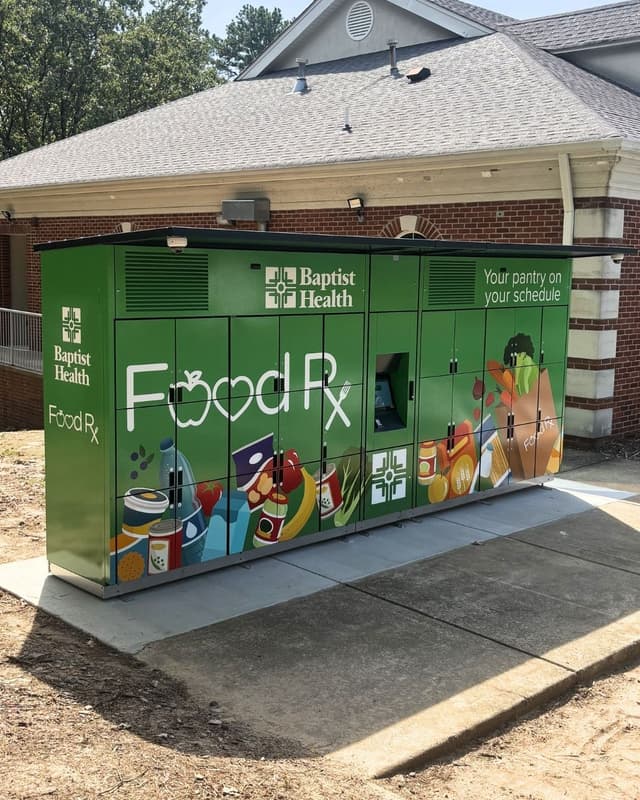
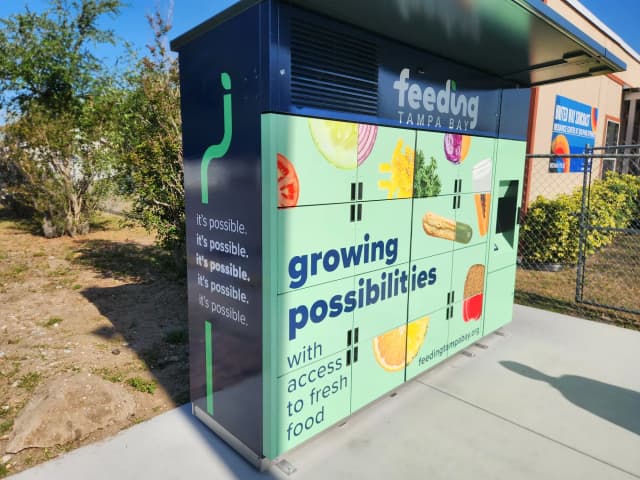
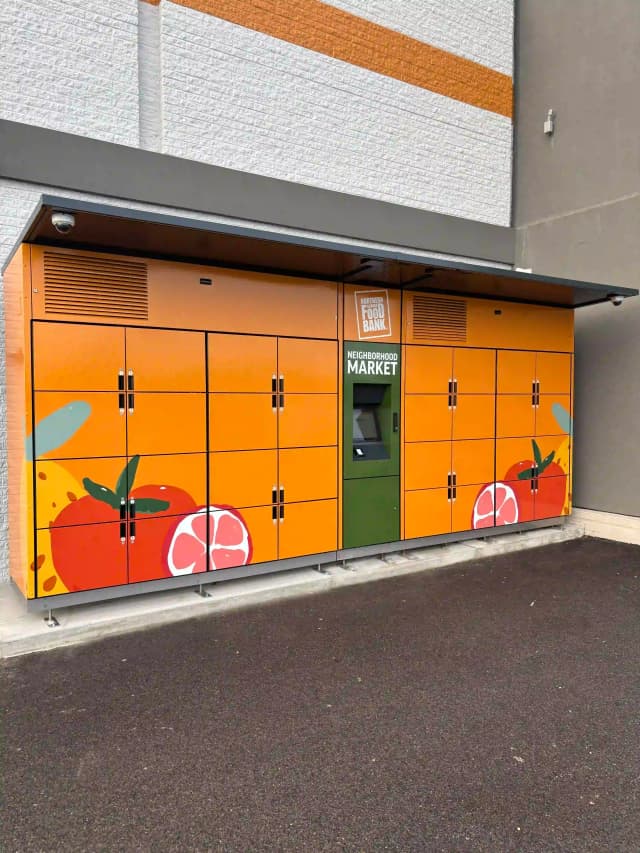
Smart food lockers are secure, temperature-controlled pickup lockers that food banks, pantries, and health programs use to distribute food. Neighbors receive a code, collect their order when it suits them, and leave, with no line to wait in and no staff needed at the locker.
This guide covers how smart food lockers work, the three order models programs use, where to place lockers, and what programs have seen after launch.
What are smart food lockers?
Smart food lockers are smart lockers built for food. Each cabinet is set to its own temperature, so one terminal can hold produce, dairy, protein, frozen meals, shelf-stable staples, and hot food side by side. The system tracks every order from the moment it is loaded to the moment it is collected.
For a food program, that means fresh and frozen food can wait safely for hours. Most programs run refrigerated food lockers alone, or refrigerated and frozen cabinets together, and add controlled-ambient or heated cabinets as their mix changes. For the detail on cooling and monitoring, read how refrigerated lockers keep food safe.
Why food banks and pantries are adding lockers
In 2024, 13.7% of US households, or 18.3 million households, were food insecure, according to the USDA's Household Food Security in the United States in 2024 report. For many of those households, the barrier is access as much as supply. Pantry hours clash with shift work, transport is limited, and some neighbors stay away from a visible line.
Lockers address each of those barriers.
Access beyond staffed hours. Neighbors collect early in the morning, late at night, or on a lunch break, without the building being open.
Dignity and privacy. Collecting from a locker looks like collecting any other order. For neighbors who avoid a line, that can decide whether they come at all.
Fewer volunteer hours on distribution. Volunteers pack at a steady pace instead of staffing a pickup window, which frees time for sourcing and outreach.
More fresh food distributed. Temperature-controlled cabinets make produce, dairy, protein, and frozen items practical to offer through pickup.
Data for funders. Every load and pickup is recorded, so reporting on reach and pickup rates is ready when a grant renewal comes around.
How smart food locker pickup works
An order is placed or assigned. A neighbor orders online, submits a request, or comes to the locker for a pre-packed box.
Staff or volunteers pack and load. They scan a barcode or log in at the locker screen, and the system assigns a compartment at the right temperature.
The neighbor gets a pickup code. The system sends a QR code or PIN by text or email as soon as the order is loaded.
The neighbor collects. They scan or enter the code, the compartment opens, and they leave with their food in seconds.
Uncollected orders are flagged. If an order is not collected in its window, staff see it in the dashboard and can remove, rescue, or reassign the food.
Behind the scenes, every cabinet reports its temperature around the clock. If a cabinet drifts out of range, its orders stay locked until it recovers, so nothing is collected out of range. The pickup screen supports 12 languages, and notifications can run by text for neighbors who don't use email.
Three order models compared
The order model is how a neighbor's food gets into a locker and how they find out it is there. Three models cover almost every program, and most organizations end up running a mix.
Model
How it works
Best for
What you need to start
Walk-up (on-demand)
Boxes are packed and stocked ahead of time. A neighbor enters a phone number or PIN at the terminal and a compartment opens.
Pantries, emergency boxes, and after-hours access
Nothing to integrate
Scheduled pickup
Neighbors order online, choose a location and window, and get a code when the order is loaded.
Choice pantries, meal programs, and campus programs
An ordering platform or a simple web form
Request-based
Neighbors submit a request. Your team fills it when inventory allows, and the neighbor is notified when it is ready.
Variable inventory, rescue food, and limited packing capacity
A request form
You don't need online ordering to start. Many programs open with walk-up, build a rhythm, and add scheduled pickup later. Already using an ordering platform? You can connect OrderAhead, which Feeding America makes available at no cost to partner agencies, or PantrySoft, and other systems can connect through our APIs.
Where to place food lockers
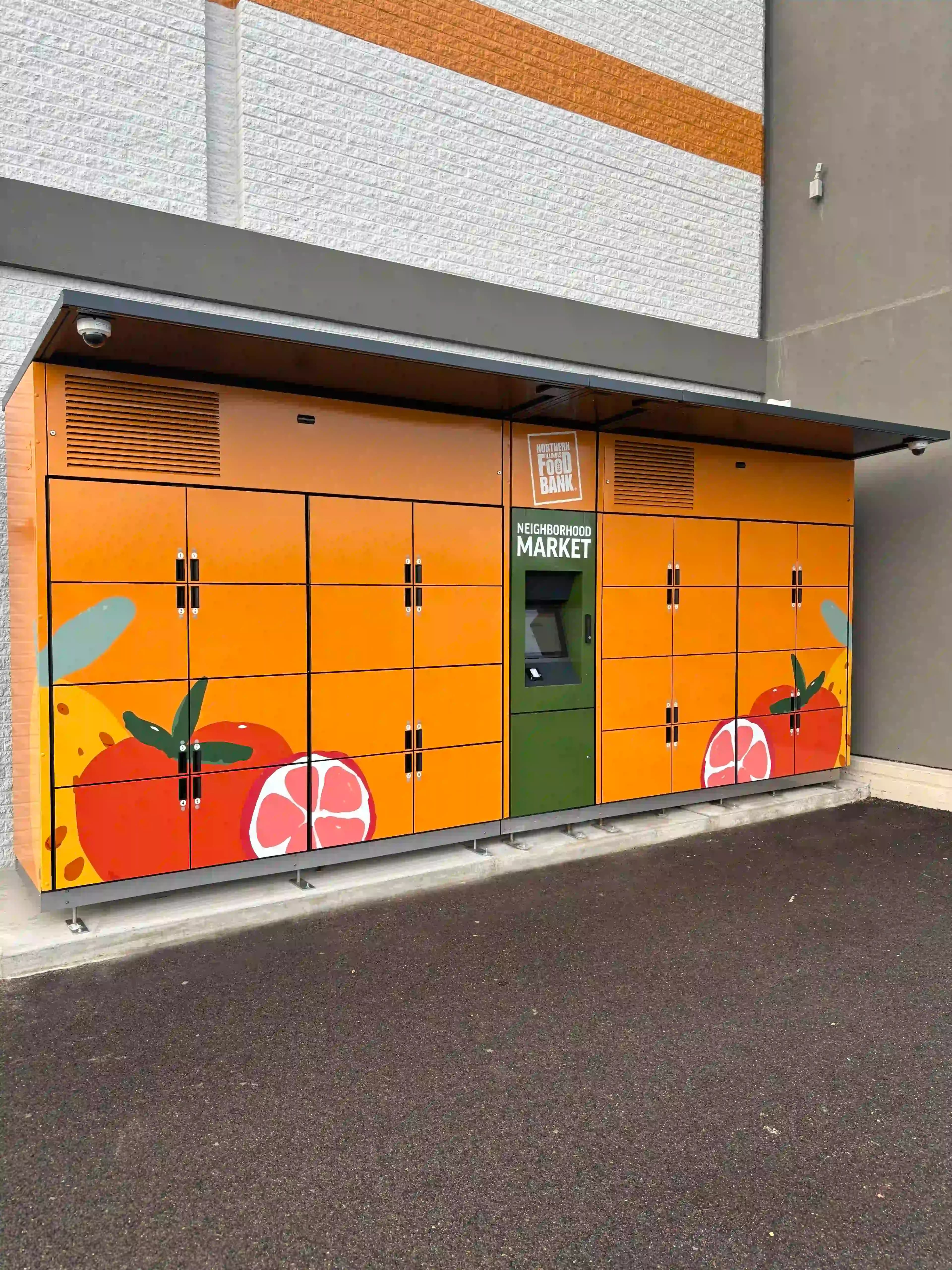
Lockers work indoors and outdoors, so they can go wherever neighbors already are.
Outside the food bank or pantry. Lockers near an entrance or parking lot extend pickup hours and ease lobby crowding.
Rural and remote sites. A single locker can act as a satellite distribution point, with consistent service and no daily staff on site.
Health clinics. Food as Medicine and produce prescription programs place lockers where patients already receive care.
College campuses. Campus food pantries use lockers for discreet pickup that fits around classes and work.
Partner agencies and community hubs. Schools, housing communities, and community centers can host lockers for a food bank's network.
Results from smart food locker programs
NNEMAP Food Pantry, Columbus, Ohio
NNEMAP added refrigerated, round-the-clock smart lockers to reach families who couldn't visit during pantry hours. The pantry tripled the number of families it serves, and the lockers brought in neighbors who had never used NNEMAP before.
"The vast majority of our unique families using the lockers are new to NNEMAP."
HealthLinc is a federally qualified health center serving patients in underserved parts of Indiana, several of its clinics in food deserts. To grow its Food as Medicine program, HealthLinc installed 16 smart lockers across four clinics, with 24/7 access, temperature control for fresh produce, and a pickup screen in English and Spanish. Pickup notifications run by text, because many patients don't use email.
At one clinic, enrollment grew from about 30 patients to almost 200 once patients could collect fresh food on their own schedule. HealthLinc reached more patients with fewer delivery runs.
At Contra Costa College in California, the Compass Market food pantry runs 20 refrigerated smart lockers in the campus cafeteria with the Food Bank of Contra Costa and Solano. At Fox Valley Technical College in Wisconsin, the OrderAhead program with Feeding America Eastern Wisconsin uses temperature-controlled smart lockers to serve students. More in food lockers for campus food pantries.
How to plan a smart food locker program
Start with one order model. Programs that launch smoothly pick one model, run it for a season, and add the next.
Choose the site. Look for power, safe access at all hours, lighting, and a clear plan for who restocks and when.
Choose temperature zones. Match cabinets to what you distribute. Refrigerated alone, or refrigerated and frozen together, covers most programs.
Size to orders waiting at one time. Count the orders sitting in lockers at your busiest moment, not your total weekly volume.
Plan how neighbors hear about it. Decide on text or email notifications, languages, and how you'll introduce the lockers to neighbors who are new to them.
Tell us how neighbors reach you today, what you distribute, and where a locker could go. We'll help you choose an order model, size the system, and plan the site.
Customers collect with a code in seconds, before or after store hours. At Muscat Duty Free, travelers pick up orders on arrival without waiting in line.
Neighbors collect fresh and frozen food privately, on their own schedule. Food banks, pantries, and health clinics use our lockers to reach neighbors who can't make distribution hours.