The way people access fresh food is changing rapidly. Online grocery orders are up. Community food programs are expanding. And the expectations around that experience — for a paying shopper and a food bank client alike — are higher than ever. People want their food to be fresh, safe, and accessible on their own schedule. That's a tall order to fill without the right infrastructure behind it.
Refrigerated smart lockers have emerged as one of the most versatile tools for meeting that challenge. Whether you're a grocer streamlining last-mile delivery, or a nonprofit trying to extend your pantry's reach beyond staffed hours, the technology works the same way — and the outcome is the same too: more people getting access to quality, fresh food, with less friction and less waste.
What are refrigerated lockers?
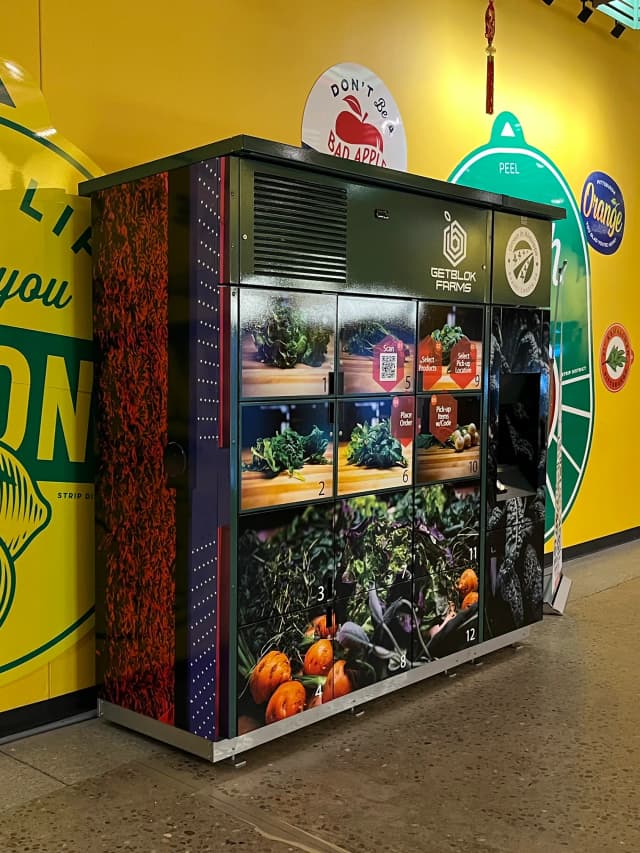
At their core, refrigerated food lockers and freezer lockers are purpose-built to safeguard and maintain perishable or sensitive products. They combine precise temperature control with remote management capabilities, allowing organizations — commercial or community — to optimize when and how food is distributed without compromising safety, quality, or operational efficiency.
The best systems bring together security, usability, flexible access control, and dependable temperature performance. The core technologies that make this work include:
- Compressor-based cooling — enables multi-zone temperature control within a single unit
- Digital programmable temperature controllers — allow precise, real-time adjustment based on what's being stored
- Polyurethane insulation — helps maintain temperature stability within compartments, even during door cycles
- Heating systems — maintain warm temperatures for hot meals or specific products
Depending on your use case, temperature ranges typically look like this:
Many deployments use a mix of these zones within the same installation — which is particularly useful when distributing a varied range of products.
Who uses them, and why it matters
This is where the conversation gets interesting. Refrigerated lockers started making waves in the grocery space, and that adoption is well-established — but the same technology is now playing a meaningful role in community and nonprofit food distribution.
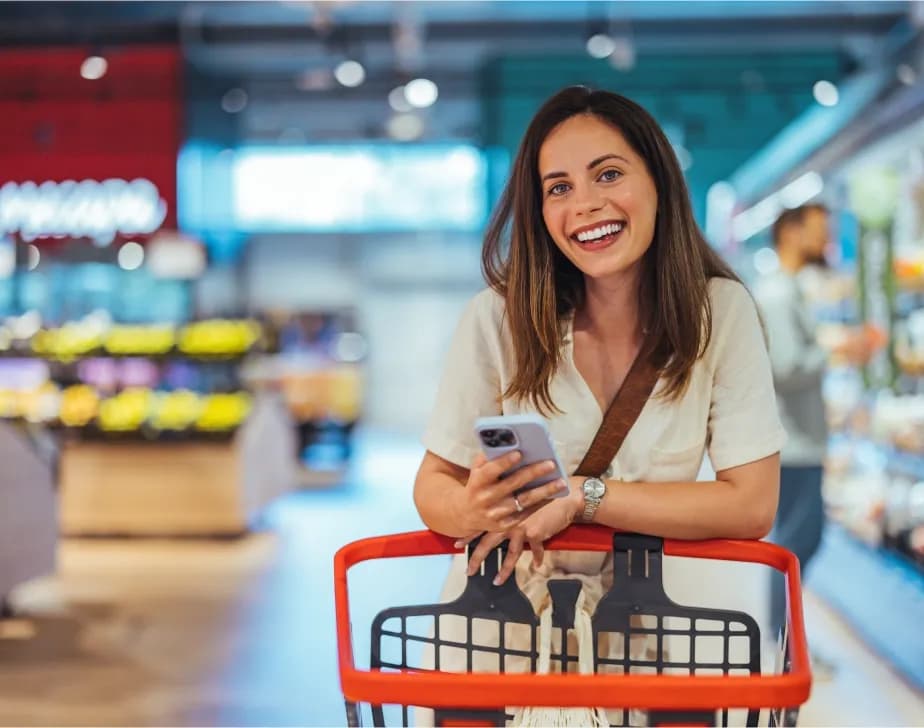
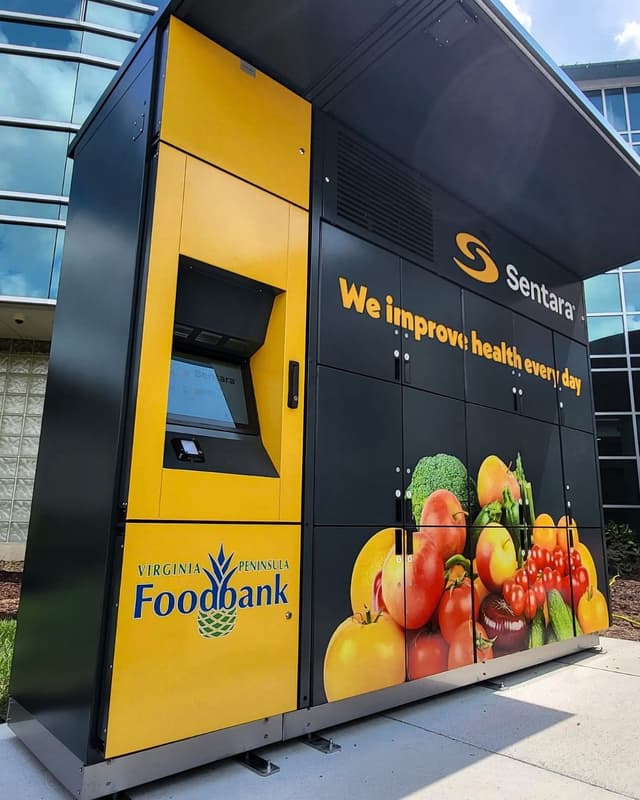
For grocery retailers and delivery operators, the case is largely about efficiency and customer experience. With online grocery orders continuing to grow — more than half of US households placed at least one online grocery order in late 2024 — the pressure to deliver fresh, perishable items reliably has never been higher. Refrigerated lockers eliminate the failed delivery problem for temperature-sensitive orders, reduce the cost of redelivery attempts, and give customers the flexibility to pick up on their schedule rather than waiting for a delivery window.
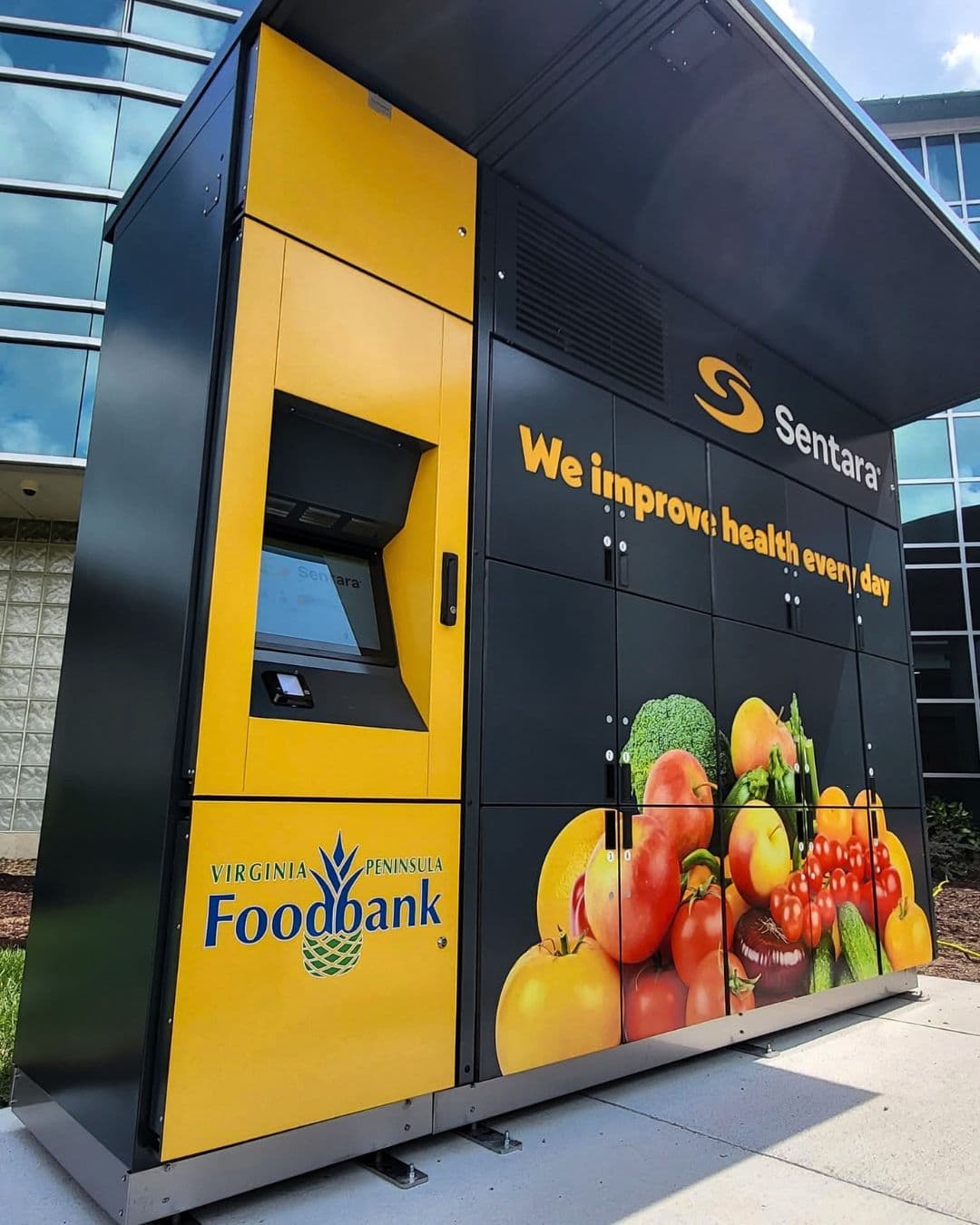
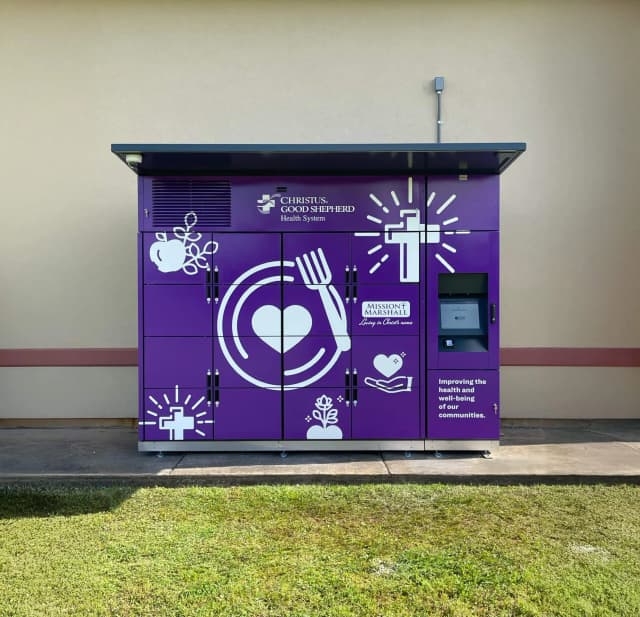
For food banks, pantries, and community food programs, the stakes feel different — but the technology addresses remarkably similar problems. Volunteer-run pantries often have limited operating hours. Clients may work irregular hours, rely on public transport, or have other barriers to accessing services during a narrow pickup window. A refrigerated locker at a trusted community location — a library, a community centre, a housing complex — means food is available 24/7, with dignity and discretion. And because the locker maintains proper cold chain conditions, donated perishables (fresh produce, dairy, proteins) can be distributed safely rather than discarded.
In both contexts, the goal is the same: getting fresh, safe food to people when and where they need it.
The technology doing the heavy lifting
Whether you're running a grocery pickup program or a community food hub, the underlying smart locker platform is doing a lot of work behind the scenes.
Temperature monitoring and alerts — Modern systems continuously monitor compartment temperatures and can trigger automated alerts if conditions drift outside safe parameters. For organizations handling perishables under food safety regulations, this creates an auditable record and a reliable safety net.
Cloud-based management — Locker software is typically delivered as a SaaS platform, accessible via browser or mobile app. Operators can manage compartments, view usage data, configure access rules, and receive alerts remotely — without needing to be on-site. For nonprofits operating across multiple locations, this is particularly powerful.
Access control and authentication — Lockers support PIN code and QR code-based access, making pickup simple and accessible without requiring users to download an app or create an account. This flexibility matters in nonprofit settings, where you might want to issue single-use codes to clients quickly and discreetly.
Automated notifications — When a parcel or food package is loaded into a compartment, the system can automatically notify the intended recipient via SMS or email. For food programs, this can be configured for discreet, straightforward communication.
Usage analytics — Operators get visibility into pickup rates, compartment utilization, peak times, and more. For a food bank, this data can inform volunteer scheduling, distribution planning, and grant reporting. For a retailer, it supports inventory and logistics decisions.
Integrations — Smart locker platforms are built to connect with existing systems via API. For grocery operators, that means integration with order management, inventory, and last-mile logistics platforms. For nonprofits, it might mean connecting to a client management system or donor-facing platform.
Scalable, modular design — Locker installations can be configured for a single indoor location or scaled across an outdoor network of sites. Units are typically modular, so additional compartments or zones can be added as demand grows.
Why organizations are switching to smart refrigerated lockers
The shift toward smart refrigerated lockers isn't just about having a cool piece of kit. For most organizations adopting them, the decision is driven by a few consistent pressures.
Operational efficiency — Staffed pickup windows are expensive and inflexible. Lockers extend service hours without extending headcount. For a nonprofit with a small team and heavy demand, that's a significant capability unlock.
Food safety compliance — Handling perishables comes with regulatory obligations. Automated temperature logging and condition monitoring simplify compliance and reduce the risk of serving unsafe food.
Reduced food waste — When perishables are stored correctly and accessible on demand, fewer items spoil before they reach the end recipient. Better temperature control and faster pickup turnaround are both contributors here.
Improved access and equity — For community food programs in particular, lockers can be placed where people already are — removing the need to travel to a fixed location during limited hours. That's a meaningful shift in who can actually access the service.
Data for accountability — Both retailers and nonprofits benefit from usage data. For nonprofits, it's increasingly useful for impact reporting, grant applications, and demonstrating community reach.
What to look for when evaluating a system
With a growing number of vendors in the market, it's worth being deliberate about what you need before you start comparing options. A quick checklist:
- Temperature range and flexibility — Does it support the zones you need (chilled, frozen, ambient, heated)? Can zones be mixed within the same unit? Explore our refrigerated and freezer locker range →
- Food safety compliance — Is the system designed to meet relevant food safety standards in your region? Can it produce temperature logs for auditing?
- Access method flexibility — Does it support simple, accessible access for your users? Look for PIN and QR code unlock as a baseline.
- Integration capability — Can it connect to your existing software via API or native integration?
- Remote management — Can you monitor and manage all your lockers from a single dashboard, regardless of location?
- Modular design — Can it scale as your program grows?
- Vendor support — What does ongoing maintenance and support look like? Is there 24/7 monitoring or a response SLA?
The bigger picture
It's easy to think of smart locker technology as a retail story — and for a long time, that's mostly how it was told. But the same infrastructure that helps a supermarket run a more efficient click-and-collect service is also helping a food pantry serve more people, more safely, around the clock.
The product is the same. The outcome — making fresh food more accessible — is the same. What changes is the context, the community, and the stakes.
Click n Collect works with both commercial operators and community organizations, and we've seen firsthand how flexible this technology can be when it's deployed thoughtfully. If you're exploring what a refrigerated locker program could look like for your organization, we're happy to talk through your specific situation.
Looking for more detail on specific use cases? Explore our grocery solutions and nonprofit programs, or get in touch to discuss your requirements.